Article · Engineering
Why Do External Forces Seem to Fight Tech Founders?

By Caleb Ngeno · November 12, 2026
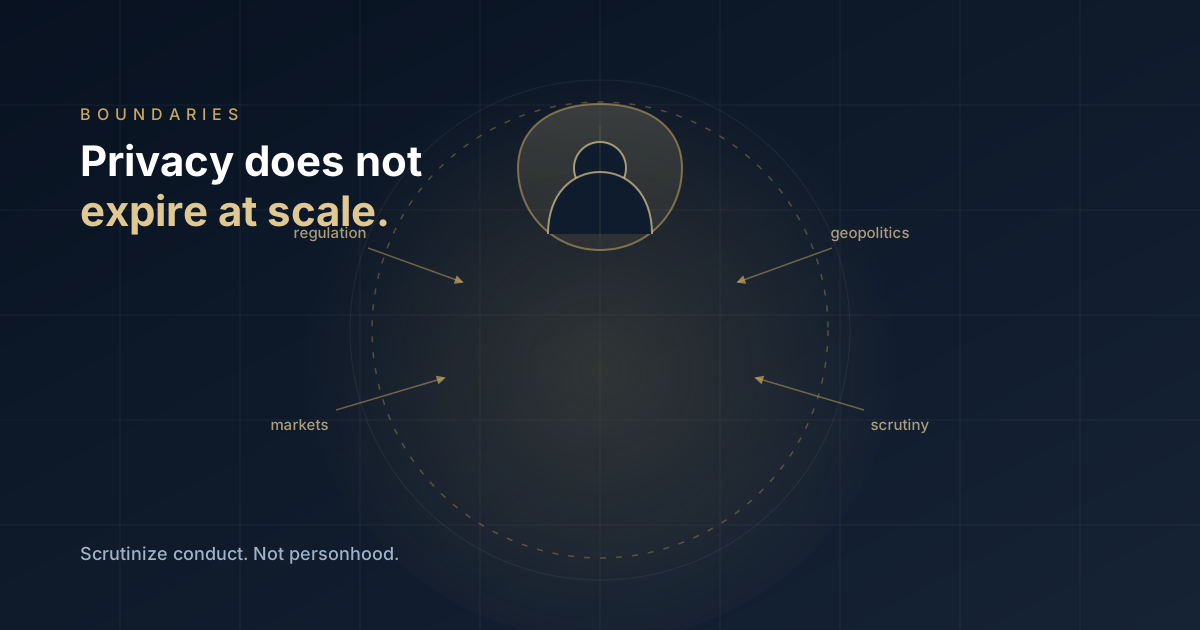
Every few months the same story seems to repeat. A technology founder builds something enormous, becomes the face of an industry, and then finds the world arrayed against them: regulators with subpoenas, governments with export controls, short-sellers with reports, journalists with old posts, and a public that once celebrated them now asking who gave them the right. From the outside it looks coordinated. From the inside it feels personal.
It is neither. What looks like a campaign is usually four separate forces pulling in the same direction at the same time. Understanding them does not make the pressure pleasant, but it does make it legible, and legible problems are the only kind a founder can actually manage.
There is also a principle that gets lost in the noise: privacy is not a perk of success, and it is not something a person forfeits by building a company. It is a baseline right that follows the individual into the boardroom and should still be there when they go home. The argument for scrutinizing a founder's conduct is not an argument for dissolving their private life.
The pattern is real, but it is not personal
The first thing to separate is perception from intent. External pressure on technology founders is well documented. What is much harder to demonstrate is that the pressure is orchestrated. Regulators, rivals, reporters, and activist investors rarely share a plan; they share an incentive. When a company becomes large enough to shape markets, labor, information, or national security, every one of those groups has a reason to look at it closely. The overlap in timing is a product of scale, not conspiracy.
That distinction matters because it changes the response. A founder who believes they are the target of a coordinated campaign looks for enemies. A founder who understands the structural forces can anticipate them.
Four forces that turn scrutiny into opposition
1. Regulation always arrives late, and it arrives hard
Technology moves faster than legislation by design. A product can reach a billion users before a committee finishes its first hearing. By the time rules arrive, they are written by people who learned about the industry from headlines, often after a visible failure. The result is regulation that feels disproportionate to founders and overdue to everyone else.
This is not a malfunction of the system; it is the system working slowly. The European Union's approach to digital markets and artificial intelligence, antitrust actions in the United States, and data-protection enforcement across many jurisdictions all follow the same curve: permissive until visible harm, then restrictive. Founders experience the swing as an attack. Regulators experience it as catch-up.
2. Geopolitics recasts companies as instruments of state
The second force is less avoidable. Once a technology becomes strategically important, the company behind it stops being a purely commercial actor. Export controls, investment screening, data-localization rules, and procurement restrictions treat firms as extensions of national capability, whether or not the founders want that role.
This is where the "external forces" narrative is most accurate and least personal. Governments are not fighting a founder; they are managing a dependency. A chip designer, a cloud provider, or a platform with a global user base becomes a lever in a contest it did not choose. The founder's preferences are largely irrelevant to the logic of the state.
3. Markets reward the attack
Scrutiny is also a business model. Short-sellers publish reports because a falling share price pays. Competitors fund research, lobbying, and litigation because a distracted rival is a weaker one. Media outlets cover conflict because conflict gets read. None of these actors need to coordinate; they need only the same target.
The asymmetry is what makes it feel unfair. A company must be correct every quarter. An attacker needs one persuasive document. Reputation, unlike a balance sheet, can be damaged faster than it can be rebuilt.
4. Concentrated power invites a cultural backlash
Finally, there is the cultural layer. Technology founders accumulate a combination of wealth, attention, and influence that few institutions in history have held at once. That concentration generates legitimate questions about labor practices, privacy, market power, and political influence. It also generates something less legitimate: resentment dressed as accountability.
The same founder who is praised as a visionary at the peak of a cycle is often reframed as a villain when the cycle turns. Some of that reframing is deserved scrutiny. Some of it is the public working through its ambivalence about power it cannot vote on.
Why it feels like a coordinated fight
Human beings are pattern-matching machines, and the pattern is genuinely strong. A regulatory inquiry, a hostile report, a critical documentary, and a rival's testimony can land in the same quarter. Each has its own cause. Together they look like a campaign.
There is also a structural reason the pressure clusters: all four forces feed on the same signal, which is size. A company becomes worth regulating, worth attacking, worth geopolitically managing, and worth resenting at roughly the same threshold. The trigger is not a founder's personality. It is the scale they achieved.
That is cold comfort when the criticism is aimed at you. But it is useful, because it separates the criticisms that require a response from the ones that require only patience.
Privacy is a boundary, not a bargaining chip
The pro-privacy position is often misread as a defense of secrecy, as if the only people asking for privacy have something to hide. That framing gets the burden backwards. Privacy protects the ordinary conditions of a life: family, health, belief, intimacy, and the freedom to be unremarkable in private. Those conditions do not become public property because someone reached scale.
What the public has a legitimate claim to is conduct that touches the company or the public interest: conflicts of interest, financial entanglements, governance failures, and behavior that creates a security risk. That is a narrow list, and it should stay narrow. When the boundary widens from conduct to personhood, accountability turns into surveillance, and the same machinery that exposes genuine misconduct begins normalizing scrutiny of private life as the price of ambition.
A defensible test is not "is this person famous?" but "does the public have a specific, demonstrable need for this specific fact?" If the answer is no, the respectful default is restraint. A society that cannot leave a founder alone in private is not holding power accountable; it is building a market for leverage.
The uncomfortable half of the answer
It would be convenient to end with the idea that founders are simply misunderstood. The honest version is more uncomfortable. External forces are not always wrong.
Companies that grow quickly often do accumulate real problems: opaque governance, aggressive labor arrangements, privacy shortcuts, and lobbying that outruns their public commitments. When scrutiny lands, the correct first question is not "who is behind this?" but "is any of it true?" Founders who skip that question tend to treat every critic as an enemy and every investigation as a plot, which is precisely how a defensible position becomes an indefensible one.
The hardest skill is discriminating between the two. Some attacks are structural and will pass. Some are accurate and will not. The mistake is responding to both the same way.
What founders actually control
If the forces are structural, the leverage is narrow but real. Three things tend to matter more than any PR campaign:
- Anticipate the regulatory curve. The rules that will apply in five years are usually visible in draft form today. Companies that engage early shape the outcome; companies that resist until the deadline get the worst version.
- Separate the signal from the noise. Track which criticisms recur across independent sources. A single hostile report is an event. A pattern across regulators, employees, and customers is a fact.
- Reduce the surface area for legitimate attack. Clear governance, honest disclosure, and consistent treatment of workers and users do not end scrutiny, but they remove the footholds that make scrutiny dangerous.
None of this eliminates the feeling of being fought. It just converts an ambient sense of persecution into a set of identifiable problems with identifiable responses.
The bottom line
External forces are not fighting tech founders because founders are special. They are fighting them because scale concentrates every kind of accountability at once. Regulation catches up, geopolitics claims what it needs, markets monetize the conflict, and the public works out its feelings about power.
Some of that is fair. Some of it is noise. But fairness and noise are not the only categories. A third category matters just as much: the private life that no amount of scale turns into public property. The founders who survive scrutiny are rarely the ones who win every argument in public. They are the ones who can tell the difference between conduct the public has a right to examine and a private life it does not.
Key takeaways
- Pressure clusters around size, not personality. Expect scrutiny to arrive in waves once a company becomes systemically important.
- Four forces drive it: regulatory lag, geopolitics, market incentives, and cultural backlash. They rarely coordinate, but they often coincide.
- Not all criticism is orchestrated, and not all of it is wrong. The first job is to determine which is which.
- Privacy does not expire at scale. Scrutiny should target conduct that affects the company or the public, not the ordinary conditions of a private life.
- Leverage is limited but real: engage early with regulation, track recurring signals, and remove legitimate footholds for attack.
- The goal is legibility. A founder who can name the force behind a criticism is far harder to destabilize than one who only sees enemies.

About the author
Caleb Ngeno
Lead Developer
Founder and lead developer with expertise in full-stack development and cloud solutions.
Need senior engineering firepower?
TechGaetano partners with teams on architecture, delivery, and the hard technical decisions that shape the next stage of a product.
Work with TechGaetanoFrequently asked questions
What is Why Do External Forces Seem to Fight Tech Founders??
Every few months the same story seems to repeat. A technology founder builds something enormous, becomes the face of an industry, and then finds the world arrayed against them: regulators with subpoenas, governments with export controls, short sellers with rep.
How should a team get started with Why Do External Forces Seem to Fight Tech Founders??
Start with the problem and its constraints, then choose the smallest tool that solves it. Build a small proof, measure the result, and expand only when the evidence supports it.
What should teams avoid when working on Why Do External Forces Seem to Fight Tech Founders??
The main risks are choosing tools by fashion, optimizing for the demo instead of production, and skipping measurement before expanding a technical bet.
Further reading
Related posts
Cloud Security and Multicloud Environments: Six Research Opportunities for Resilient Enterprise Architecture
Abstract. Multicloud is no longer an exception in enterprise architecture. It is the normal operating condition: public clouds, private clouds, SaaS,…

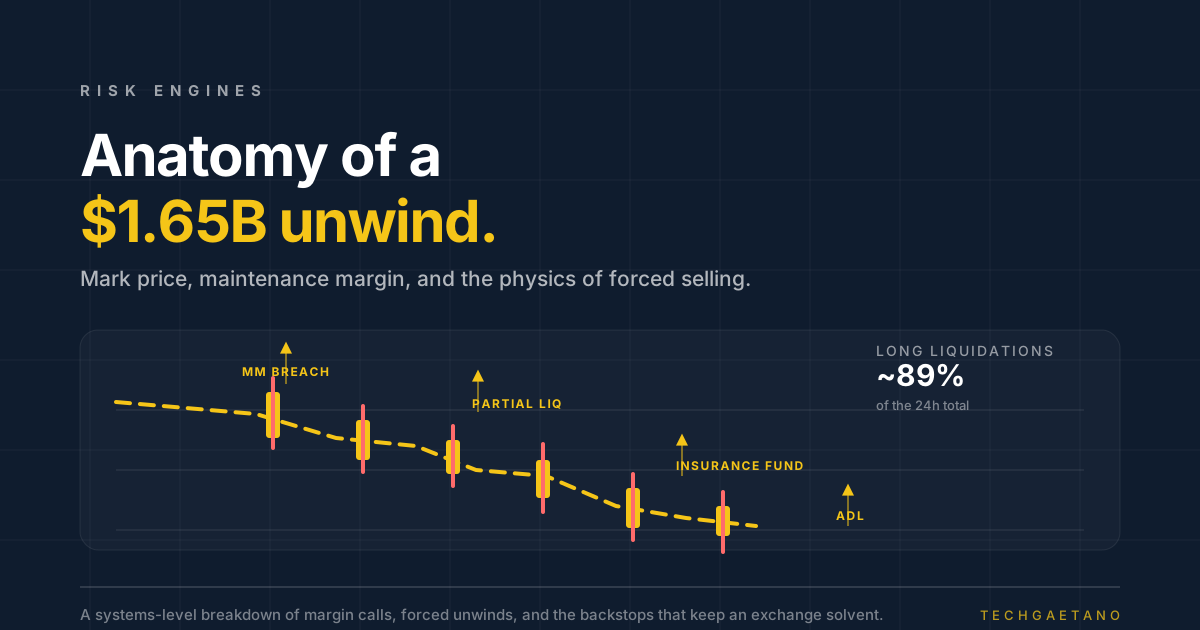
Anatomy of a $1.65B Liquidation Cascade: How Automated Margin Engines Handle Extreme Volatility
Hot US inflation data just triggered roughly $1.65 billion in crypto liquidations. The headlines call it a crash. Under the hood, it was a distributed…