Post
Cloud Computing Trends
By Caleb · August 3, 2026
Cloud computing stopped being news a decade ago because it stopped being optional. Almost every company runs on it now. But the cloud of 2027 looks very different from the cloud of 2017 — and the trends reshaping it will decide who pays for what, where workloads run, and how much of your infrastructure bill is eaten by AI.
The cloud becomes a spread
For years, the story was simple: move everything to one public cloud. That era is over. In 2027, most enterprises run a deliberate mix — multi-cloud and hybrid, spreading workloads across providers and between cloud and on-premises for the same reasons portfolio managers diversify: cost, resilience, and negotiating power.
The new mindset is portability. Companies build against open standards and container APIs so they are not locked to a single vendor's pricing table. The cloud is no longer a destination; it is a toolkit you choose from workload by workload.
AI-native infrastructure
The single biggest force in cloud right now is the demand for AI compute. Training and running models has created an entirely new infrastructure layer: GPU and accelerator pools, specialized networking, and data centers engineered for heat and power.
This shows up in the bill too. AI is becoming the dominant line item in cloud spending, and the winners will be the companies that manage it tightly — right-sizing models, caching aggressively, using cheaper inference options where quality allows, and treating GPU time like the expensive resource it is.
Serverless grows up
Serverless computing — where you pay only for the milliseconds your code runs — has matured from a niche to a default for new applications. The friction that used to scare teams away, like cold starts and vendor lock-in, has largely been engineered out.
What is new is the combination of serverless with AI: event-driven functions that trigger models, stream results, and orchestrate agents without keeping a single server awake. The economics are attractive for workloads with variable traffic, and the operational savings — no patching, no capacity planning — are real.
Edge and the cloud meet
Cloud and edge used to be framed as opposites. In 2027 they are one system. Data that needs instant response is processed at the edge — in factories, retail stores, vehicles, and cell sites — while the heavy lifting and the long-term storage stay in the central cloud. Orchestration platforms decide in real time where each piece of work should run, based on latency, cost, and reliability.
For enterprises, this means the question is no longer "cloud or on-premises." It is "how do I place my workload across a continuum that spans both?"
The rise of FinOps
Cloud bills have grown so large that a new discipline has gone mainstream: FinOps, the practice of treating cloud spend with the rigor of finance. Teams now get budgets, not blank checks. Every workload has an owner accountable for its cost. Autoscaling, right-sizing, storage tiering, and spot instances are not tips anymore — they are standard operating procedure.
The result is a cloud that is more predictable, with engineering and finance aligned on the same numbers.
The bottom line
The cloud in 2027 is more complex and more capable than ever — and that complexity is the price of flexibility. The winning strategy is not to pick one trend and ride it, but to build a portfolio: public cloud for agility, private infrastructure where control matters, edge where milliseconds matter, and a FinOps discipline to keep it all affordable. The companies that treat the cloud as a strategic spread — not a single bet — are the ones that will compound the advantage.
Related Posts
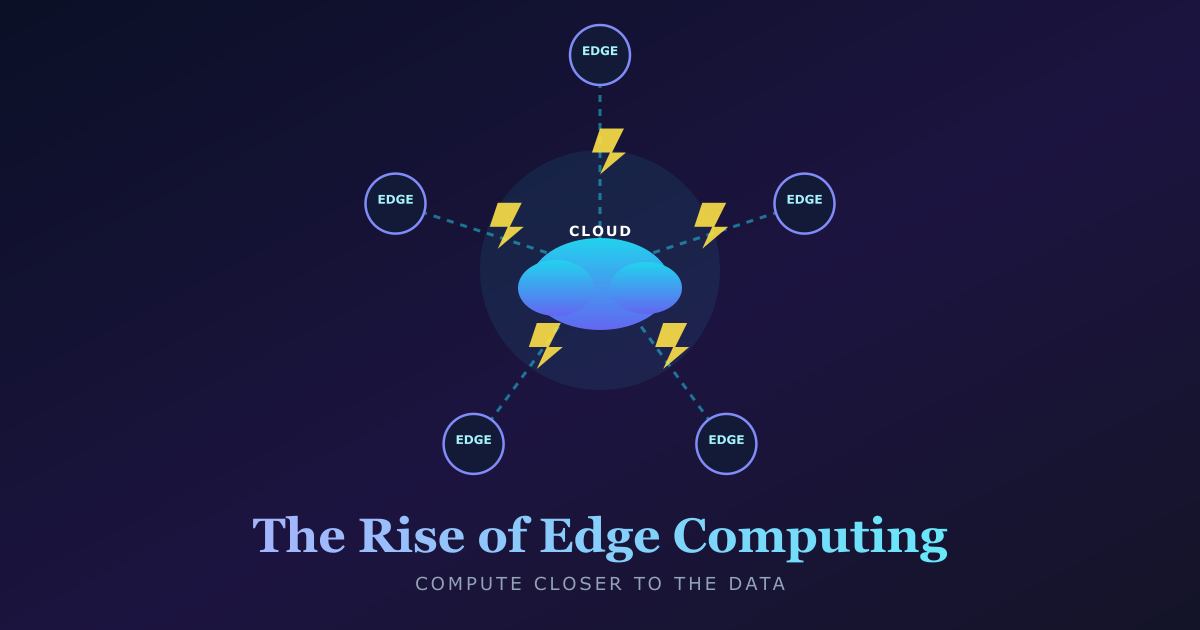
The Rise of Edge Computing
For the last twenty years, the architecture of the internet was simple: send the data to a central cloud, get the answer back. That model worked beaut…
Read More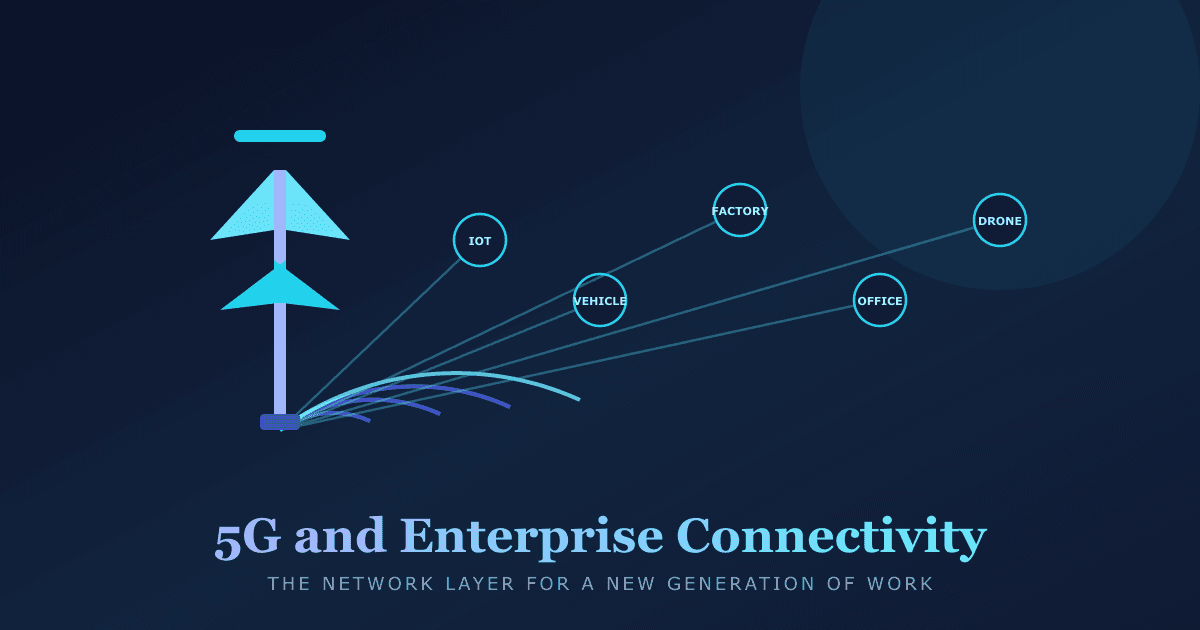
5G and Enterprise Connectivity
For consumers, 5G mostly means faster downloads on a smartphone. For enterprises, it means something far more consequential: a network layer capable o…
Read More